In order to take away the big-hitting server who likes to camp out at the baseline and hit big groundstrokes, your singles and doubles players will have to learn to return serve crosscourt and low. This takes a doubles server’s partner out of the point, and force the server to come in and hit a low, short ball on the run.
Players must practice like they play, or they’ll play like they practice, so it’s necessary to set up drills which include target areas and pressure, just as your players will in a match.
Teach your players how to return crosscourt and low with the following drill.
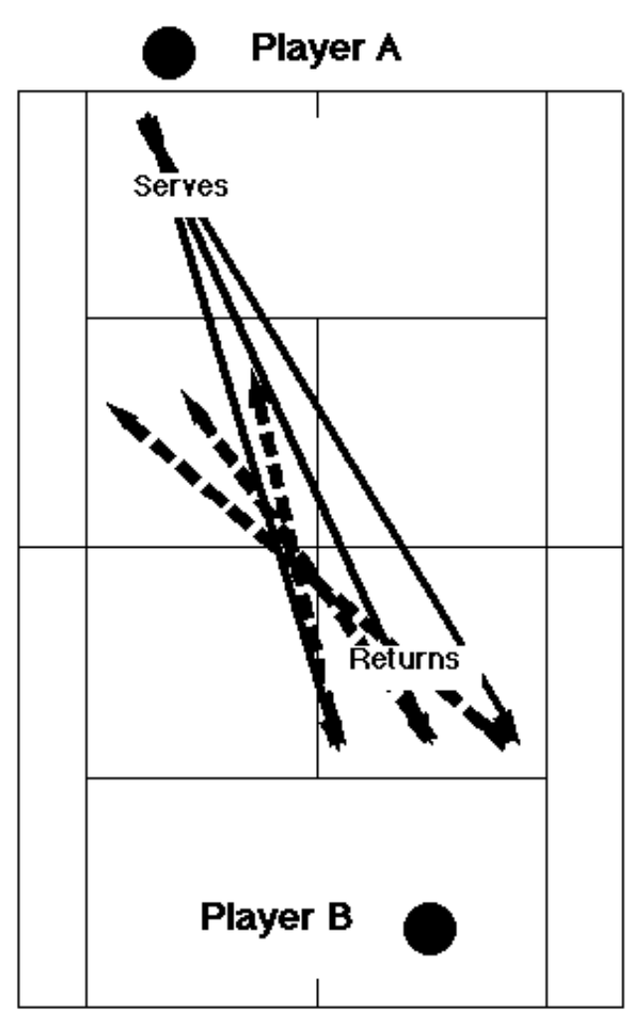
Step #1 — Player A serves second serves to player B, who practices returning the ball short and crosscourt, in front of the service line. Player A begins by serving four balls down the middle, four balls down the center of the service box, then four balls wide, so Player B can get into a groove.
Step #2 — Player A serves another 10-12 second serves, mixing up serves wide, down the middle and down the center (into the body).
Step #3 — Player A begins to serve first serves. Player B must return the ball crosscourt, in front of the service line.
Each time he does so successfully, he wins one point. Each time he misses, Player A wins the point. First player to reach 11 points wins.
Step #4 — Player A and Player B switch roles.
Step #5 — Player A and Player B switch roles, and run the drill from the opposite court on which they started (ad or deuce).
Step #6 — Player A and B switch roles, so that each player has practiced from both ad and deuce courts.
Tip #1: During the drill, take a break to bring your players in and discuss the mechanics of hitting short and crosscourt. Remind them that their primary target is not where the ball lands, but where it crosses the net. Place a sports towel on the net and have the servers practice hitting to the right or left of the towel to create a wide return. You can do this to practice serve placement, as well.
Tip #2: Point out that the ball travels to the other side of the net based on the direction the paddle is facing at contact—not based on the follow through. Have your players practice hitting balls down the line, then crosscourt, using the same swing, but different contacts points (earlier and later).