
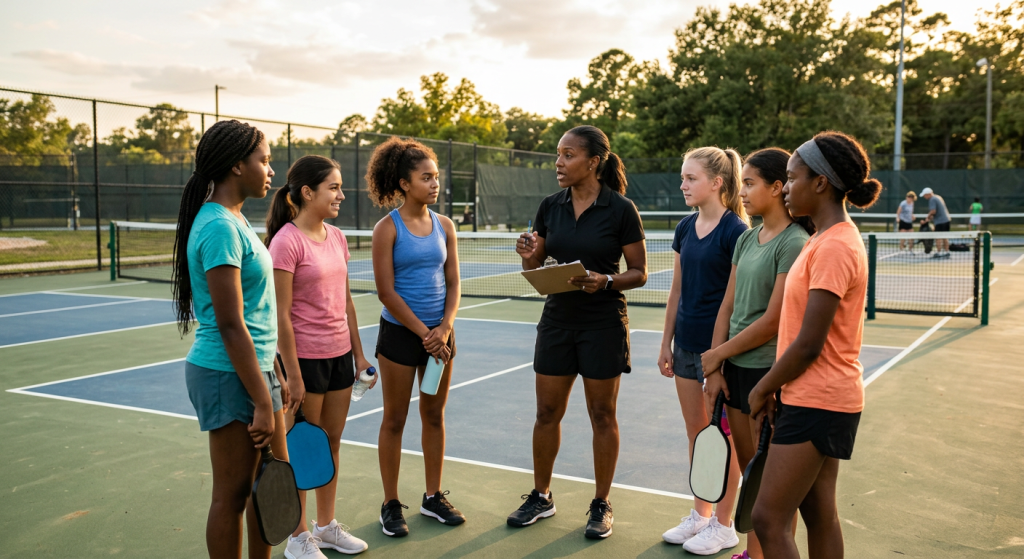
Why Your School has a Pickleball Team
Remember that sports teams did not add schools to their activities, schools added sports teams to theirs. The main reason for scholastic sports is to help students develop life skills through athletics.
These skills include goal-setting, discipline, teamwork, self-esteem and sportsmanship (winning and losing gracefully), to name a few.
Never forget that you do not coach pickleball, you coach youngsters.
I. Getting Started – You’re not Alone
If you are a first-time coach (and possibly, a coach who does not play pickleball), realize that you are not alone.
There are many high school pickleball coaches who are not experts with years of experience and playing ability better than their team members.
Many pickleball coaches have taken on the responsibility at the request of the school’s athletic director because there was no one else to coach pickleball that season.
If you are a parent or local pickleball enthusiast who has volunteered to coach the team, you should also understand that you are not alone, either, as many high school pickleball programs are coached by volunteers as well.
If you have never coached a team before, you’ll want to prepare yourself as fully as possible before you meet with your players and/or their parents.
This workbook contains much of what you need to know about getting started coaching high school pickleball.
II. Work with Your A.D.
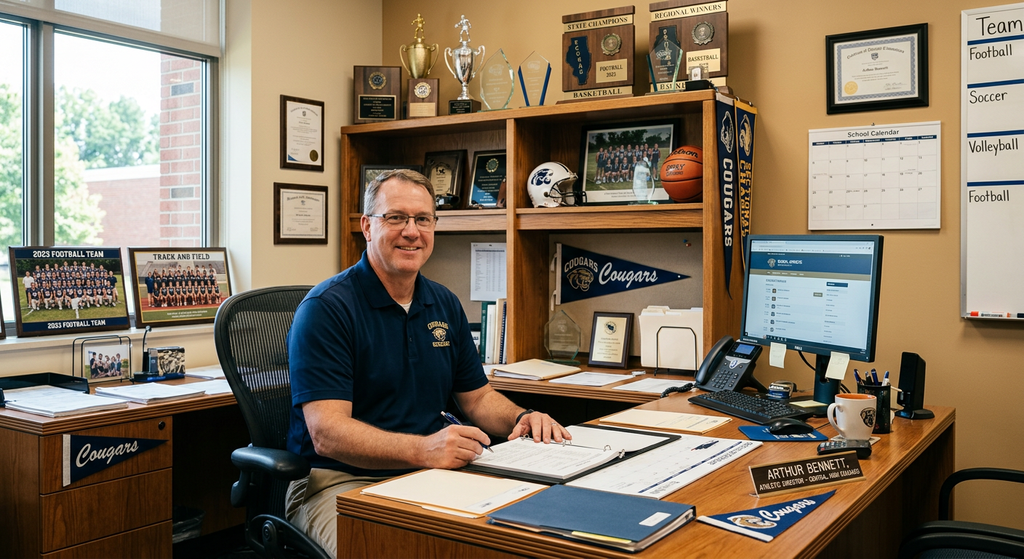
Regardless of whether you are a teacher at the high school, a local pro or a volunteer, the school’s athletic director is your boss. While he may be grateful to have you, he also has a boss and he is responsible for anything that goes on in your program.
Make sure to discuss exactly what the A.D. expects from any sport at the school. What is the goal of the overall sports program? What rules do all coaches follow? What are the team rules which apply to all sports? What are the conference rules by which your school must abide? What is the history of the pickleball program?
Prepare a season calendar (include all team meetings, fundraisers, practices, matches, awards banquet, etc.)
Don’t forget, in addition to your on-court work, you’ll have administrative duties as well. Make sure you know whether or not you are responsible for the following:
•Collecting/ verifying physicals forms
•Collecting/verifying liability waivers
•Transportation
•Uniforms
•Equipment – (balls, hoppers, targets, etc.)
•Court maintenance – (nets, windscreens, garbage cans, etc.)
•Fundraising
•Tournaments – (T-shirts, sponsors, balls, trophies, umpires, etc.)
•Awards
•Program finances – (meals, hotels, equipment purchases, etc.)
•Team communications – (website, apps, etc.)
Know your responsibilities in these areas before meeting with parents; they can help you with many of these tasks.
Be sure to discuss with your A.D. which of these responsibilities can be shared or completely handled by parents.
Know All the Rules and Regulations
There are links to the Rules of Pickleball on the Resources area of the USHSPA website. You will also need to know any league or conference rules in effect for your school, as well as your state high school athletic association rules.
III. Establishing Your Coaching Style
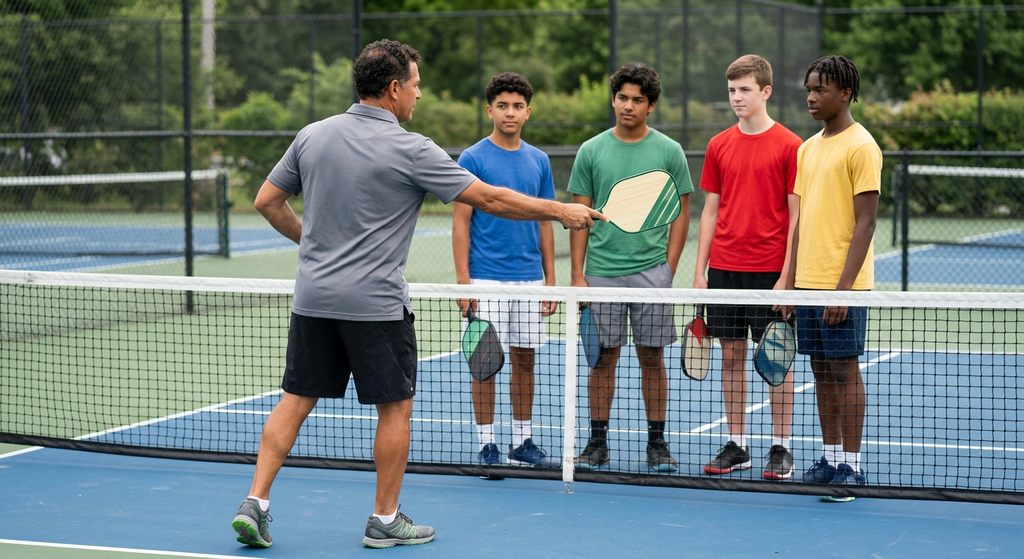
It’s important to develop a coaching style and to stick with it throughout the season. If you decide to be a “buddy,” and find this doesn’t work, it’s tough to change course midway through the season.
If you don’t earn a youngster’s respect in the beginning, it’s tough to try to do so later. This is why announcing that you don’t have experience coaching or in any way acting apologetic to the team will create an immediate lack of leadership on your part.
Conversely, if you come on too strong in order to sell yourself or establish discipline, you may alienate players.
Find a coaching style with which you feel comfortable so that you can coach with confidence—kids smell fear in a coach, so determine what your strengths and abilities are, and coach from them.
You should to read, What Kind of Coach are You?, in this workbook. Following are tips to help you establish a coaching style.
Meet with Other Coaches at your School
Before or after meeting with the A.D., meet with other coaches to get their recommendations as to how you can best work with the A.D. and fit in with the overall program.
Additionally, no one knows the kids at your school better than the other coaches, who may have already coached some of your players in other sports. Ask for their advice in three areas:
1) General coaching tips
2) Working with the A.D. and the school
3) Working with particular students
Meet with Local Pickleball Pros
If your players are any good, chances are they’ve taken or are taking lessons from a local pickleball pro. Local pros can give you an idea of how long or how often you can expect certain types of conditioning, drills and practice routines to hold a teen’s interest and how to set up your practices.
If your players aren’t very experienced and the local pros don’t know any of your team members, they should still be willing to help, and might be able to lend you books and videos, watch one or more of their junior program practices, or spend an hour on court with you showing you some basic drills.
Offer to take the pro to lunch in order to pick his or her brain and listen to any advice they can give. Contact the Professional Pickleball Registry, Racquet Sports Professional Association, International Pickleball Teaching Professional Association or Racket Professional Organization and ask for contact information for their members in your town.
You can find contact information for these organizations in the Links section of www.ushspa.org.
When you call a local pro, begin your conversation by stating the national office of the PPR or RSPA or RPO gave them your name, which may motivate them to help even further.
Meet with Parents
With some high school pickleball programs, parents arevery involved, while in others, you may meet one or two parents during the course of the season.
When parents get involved, it can be a positive experience or a very negative one. Make sure you address the area of parental involvement with your A.D., and if possible, the local teaching pros.
Parents can be a great help, helping with fundraising, driving to meets, filling you in on your team members (objectively and subjectively) and even on court, depending on the level of your program.
They can also be a huge interference, especially if you are new to coaching, as they try to tell you how to coach your team. Don’t be intimidated, but be careful not to be dismissive or try to “lay down the law”.
These parents may pay your salary and you’re coaching their kids. This doesn’t give them the right to interfere with your team, but you must have patience and use as much tact and diplomacy as possible in the care and feeding of parents.
Remember, some parents may be school boosters and can cause you headaches with your AD or principal.
Determine Your Team Rules
What happens if one of your best players has a part-time job? Can team members miss practice if they are attending a local academy training program? What are the school rules concerning academic performance? Will you have a curfew?
These are just a few of the questions for which you must have answers before situations involving them arise.
Using your school’s rules for athletic programs will give you a sound foundation, as will added direction from your A.D., other coaches and even parents (who know exactly how their kids will try to test the rules).
Once you make your rules, stick to them, or you lose your player’s respect and confidence. Sticking to ill-conceived rules can be just as harmful as bending good ones, so plan your rules thoughtfully and in advance.
IV. Your First Team Meeting – Establish Yourself
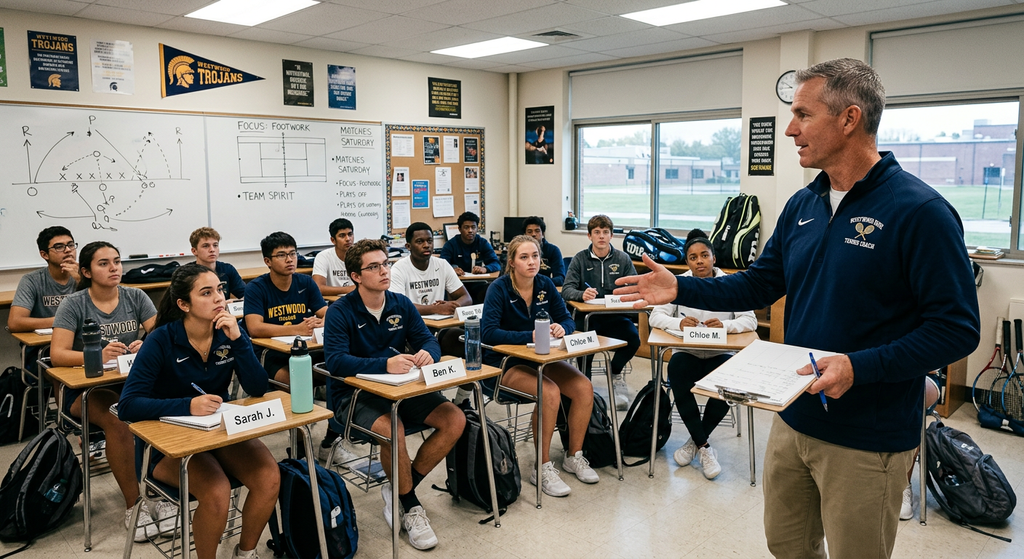
When you first meet with your team, you will establish your authority as their coach simply by the confidence with which you convey your information.
Introduce yourself and tell why you were selected by the A.D. to coach the pickleball team this season and your qualifications to do so.
Even if you are an English teacher who has never hit a pickleball ball in your life, you are still a faculty member and an adult who has agreed to coach the team so the kids have the opportunity to play. Don’t oversell yourself—the kids will see through it.
Hopefully, you have already met with other coaches, parents and a local teaching pro and have possibly located someone who can come out once or twice a week to help with practices.
Even if you haven’t, the articles in this workbook will help you organize your season, and you’ll be able to present this to the team.
If you have to, recruit your top players to help you plan practices. Have the team elect a captain or co-captains who will then fill you in on how practices have run in the past, and with them, develop a program.
In this scenario, it’s important to establish that you are the coach and will run the practices—don’t allow the kids to run their own.
Remember, honestly let the kids know what your role is, even if it’s just organizing practices, handling paperwork, arranging rides, etc.
Establish the School’s Goals
Every high school offers sports programs for a reason.
Present these reasons to the kids, emphasizing that they are student-athletes, and that a major goal of scholastic athletics is to build life skills.
Letting the kids know that the school wants the pickleball program (and all of its sports) to help teach its students discipline, goal setting, teamwork, etc., will make it easier to enforce your team rules (discussed below) throughout the season.
Establish the Team’s Goals
Your athletic director will have not only general goals that apply to all of the school’s sports, but the pickleball program as well. He or she should know how the team did last year, who has returned, who the traditional strong schools in your conference are, etc.
Your A.D. should have realistic goals and reasons on which those goals are based.
In addition to your A.D.’s goals, discuss with your team what they want to achieve, feel is realistic and what goals they are willing to work hard for.
When a roomful of team members sets and agrees to goals, this puts more pressure on individuals to pull their weight, and work on all parts of their games, including conditioning.
Establish Individual Goals
Setting individual, as well as team performance goals not only gives meaning to each days’ practice, but also builds team camaraderie.
Discuss performance goals (such as number of wins) as well as skill goals (improved serve, conditioning, backhand) and set steps for the player to track his or her performance.
Establish Team Rules
Once you’ve established your team goals, you’ll damage your credibility with team members if you keep changing them. It’s important that you develop team rules with your A.D. and other coaches and try to anticipate problems before they occur.
If you have overly strict attendance policies, you might preclude a top player with a once-a-week, after school job, or who volunteers his or her time at a local charity from playing on your team.
Team rules should cover attendance, grades, behavior, curfew and take into consideration players’ behavior away from school and the pickleball team. What if your players are caught drinking at a friend’s home on a Saturday night?
Again, working with your school’s athletic department will save you from re-inventing the wheel and running into problems you might not foresee on your own.
Establish Lineup/Challenge Procedures
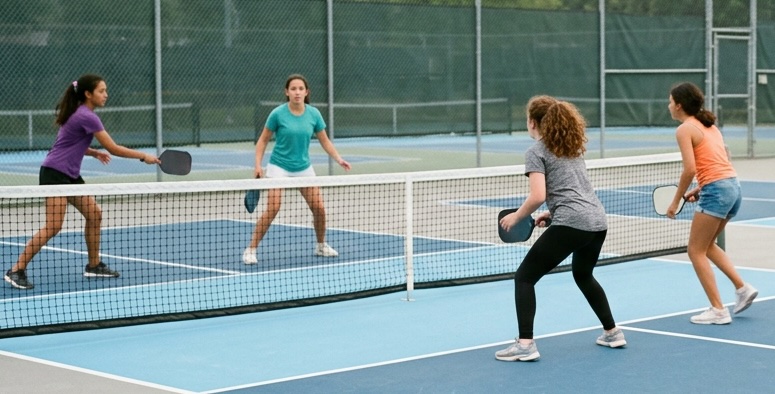
It’s important to establish objective criteria for deter- mining who will play #1, #2 and on down the line. Some coaches believe that allowing any player to challenge for a position before a team match keeps every player focused.
This may not be fair to other teams in your league if the last week of the season, your number #3 player, who has never taken a set off your #1 player, beats the #1.
Your conference may also have rules regarding fair lineups, so be sure to know the rules before the start of conference play.
Because teamwork is so critical in doubles, personalities must be taken into consideration, making choosing doubles teams a more subjective endeavor. Once teams are chosen, however, objective criteria for which position each team will play should be used.
Warmups
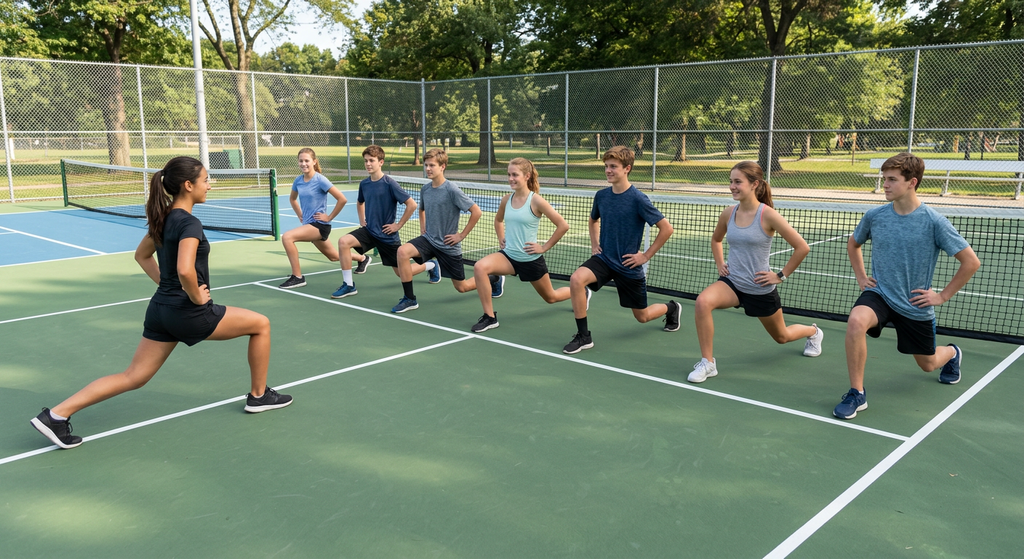
You may not always be there at the beginning of practice; go over with your players the warmup routine (including strokes and dynamic stretching) which will start each practice.
In your effort to learn about coaching pickleball, you will be relieved to know that there are a number of excellent books available for pickleball coaches.
There are even books geared toward the novice coach which provide basic coaching information, with basics about youth psychology, discipline, self-esteem, eating disorders, building team spirit, and other useful information that transfers across any sport.