
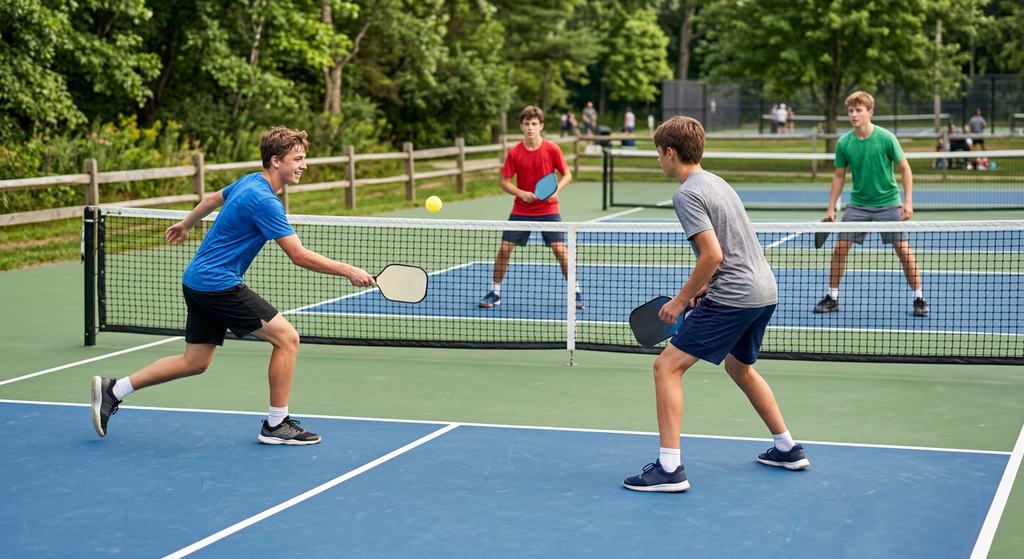
Each time a pickleball player, at any level, hits a ball, he or she has five goals, in order of priority:
#1 Get the ball in
#2 Control the direction (left and right)
#3 Control the depth (deep and short)
#4 Control spins
#5 Control the speed
#1 Get the Ball in
This may sound obvious, but remember that positioning is critical to any shot, and if a player is so focused on an open area of the court for a putaway (direction), or is keyed up about powering an approach shot deep to the corner (speed, depth and direction), he may focus on the mechanics necessary to achieve these before he is in position.
Make sure your players understand the importance of good footwork and positioning on any type of shot as THE key component to its success. At the recreational level of play, most mistakes are the result of poor positioning, not bad mechanics.
#2 Control the Direction (left and right)
It doesn’t matter if you hit the ball hard, if you hit it right to your opponent’s forehand. In fact, most players prefer not to have to generate their own power.
The second-most important skill is directing the ball left and right. This lets you to take advantage of opponents’ weak backhands, poor lateral movement, etc.
This will also allow them to use two or three shots to get an opponent out of position and open up the court for a winner. Most winners at equal levels of play are hit to the open court — not directly at someone.
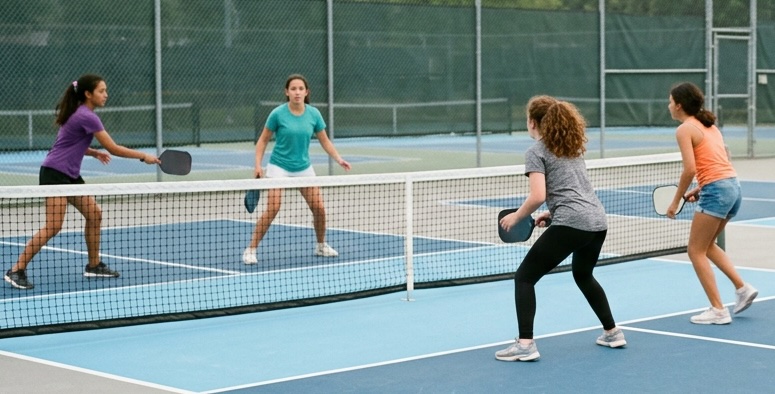
#3 Control the Depth (deep and short)
If players can keep the ball in play and move opponents left and right, they can now use short and deep balls to force errors, produce weak and short returns, and open the court.
Making an opponent take several steps laterally (wide) and one or two into the court (forward) to hit a forehand gives your player an opportunity to hit the next ball deep and crosscourt to the opponent’s backhand. The opponent must now run five or six steps backwards to hit their backhand.
Any time you can make your opponent hit a backhand while running backwards, you can expect a weak response.
If the opponent does not make an outright error, he or she will probably hit a short ball, which your player can now hit short and crosscourt to the open court they have created.
As you can see, none of this was accomplished with power—the point was created using the first three skills.
If your players can keep the ball in play while controlling depth and direction, they will be able to win many matches even if they doesn’t have much topspin, a good slice or overwhelming power.
While spins and speed are very important as players move into highly competitive levels of play, they are only useful to players who have mastered the first three skills. A topspin forehand that goes long, or a 100 mph serve that goes into the bottom of the net is no good.
#4 Control Spins
In order to hit to certain areas of the court, your player will need to be able to slice or put topspin on the ball. A crosscourt winner, hit inside the opposite kitchen line from inside your baseline, will require topspin.
A deep, down-the-line, slice approach shot which bounces low forces a baseline player to hit up, limiting their chance for a pass. This type of approach shot requires slice.
Finally, the harder you hit a pickleball ball with topspin, the more likely it will go in, based on the laws of physics.
#5 Control the Speed
Of course, a ball traveling 70 miles an hour will be more
difficult to run down than a ball traveling 50 miles per hour. However, a 70 mph ball is useless if it doesn’t stay in the court. It’s also not as effective if hits right to an opponent.
Players must also be able to vary their speeds in order to take advantage of angles, hit dinks and drips, make delicate lob volleys and hit other specialty shots.
Bottom line? Speed is only valuable if you can keep the ball in play and hit it where you want.
Summary
Review these five priorities with your players until they understand the importance of not going straight for power.
They will be more likely to buy into your information if you immediately discuss the basic strategies and tactics that win matches, and show the elements critical to the success of each (they’ll see that direction and depth are much more important than power).